 FamilyHub
The usual order is to shop first and decide at six o'clock what to cook. Reversing it, so that you decide first and shop second, removes a daily decision and usually shortens the list.
Start with what is already in the house
Look at what needs using up before you look at recipes. Half a bag of rice and a few vegetables are the start of a meal, and planning around them wastes less.
Plan around your week, not an ideal week
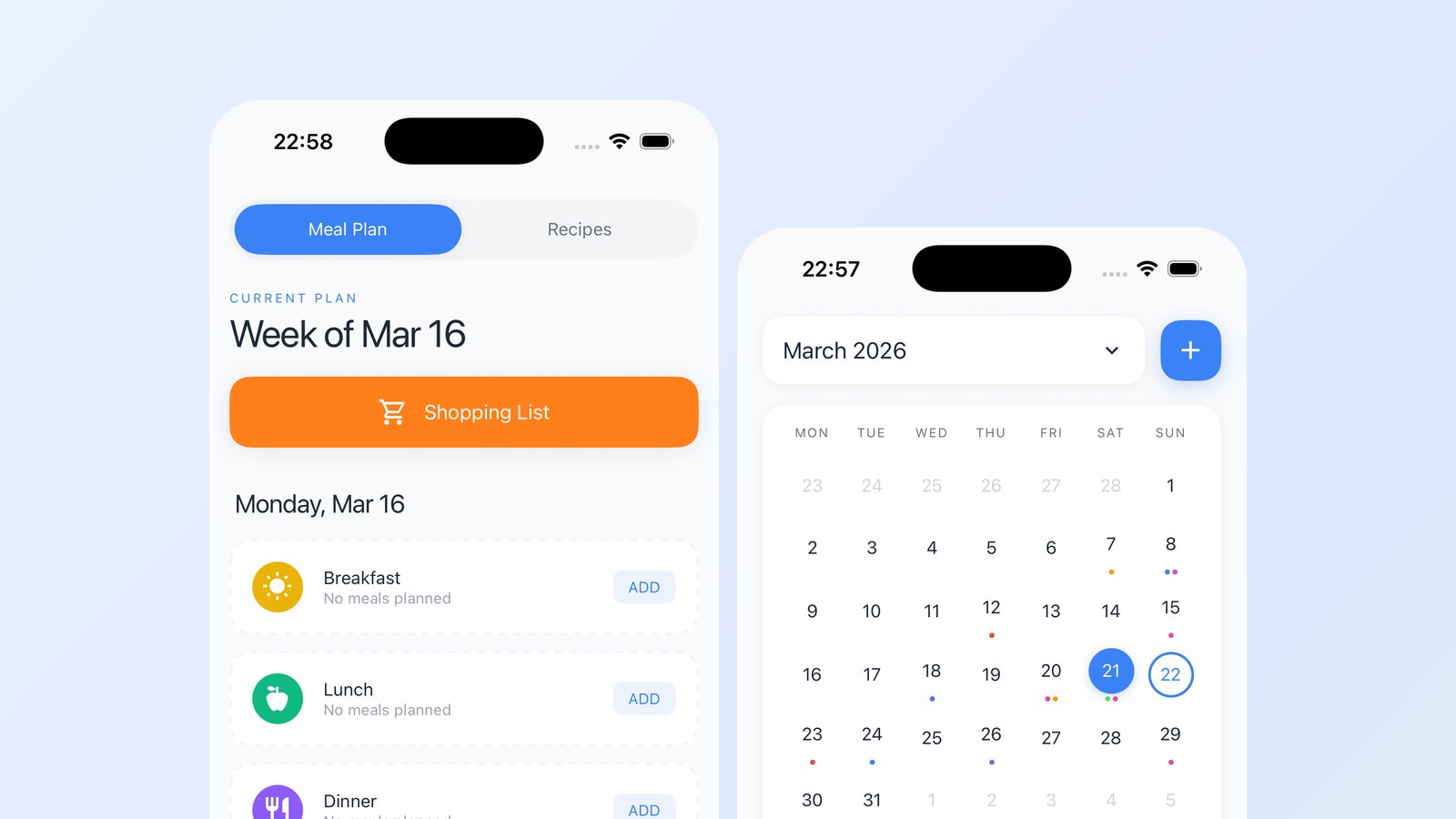
Check the calendar first. On the evening with football practice, plan something that takes little time. On the evening when everyone is home, cook the dish that needs attention. A plan that ignores the schedule will be abandoned by Wednesday.
Fill dinners first, the other meals later
Dinner is the meal that causes the most stress, so plan it first. Breakfast and lunch tend to repeat and can wait. Leaving a slot empty is fine. A plan with five dinners is better than no plan.
Build the list from the plan
Write the shopping list while you look at the plan, not from memory in the shop. FamilyHub's meal screen has a weekly plan with breakfast, lunch and dinner slots and a Shopping List button next to it, but a paper list on the fridge does the same job.
Let someone else choose one night
Give each person one dinner to pick. It keeps the plan from reflecting only one person's taste, and it gets children interested in what is on the table.