 FamilyHub

A chore chart fails when it becomes a list of reminders that a parent has to deliver. It works when the chart itself does the reminding and the child can see their own progress.
Keep the list short and specific
"Tidy your room" means something different to every person who hears it. "Put dirty clothes in the basket" has a clear finish line. Three or four specific tasks per routine are easier to keep up than ten vague ones.
Split the day into routines
Morning, evening and a separate list for household chores is a common split. Each routine is small, and a child can see that the morning list is done even if the chores list is not.
Make finishing visible
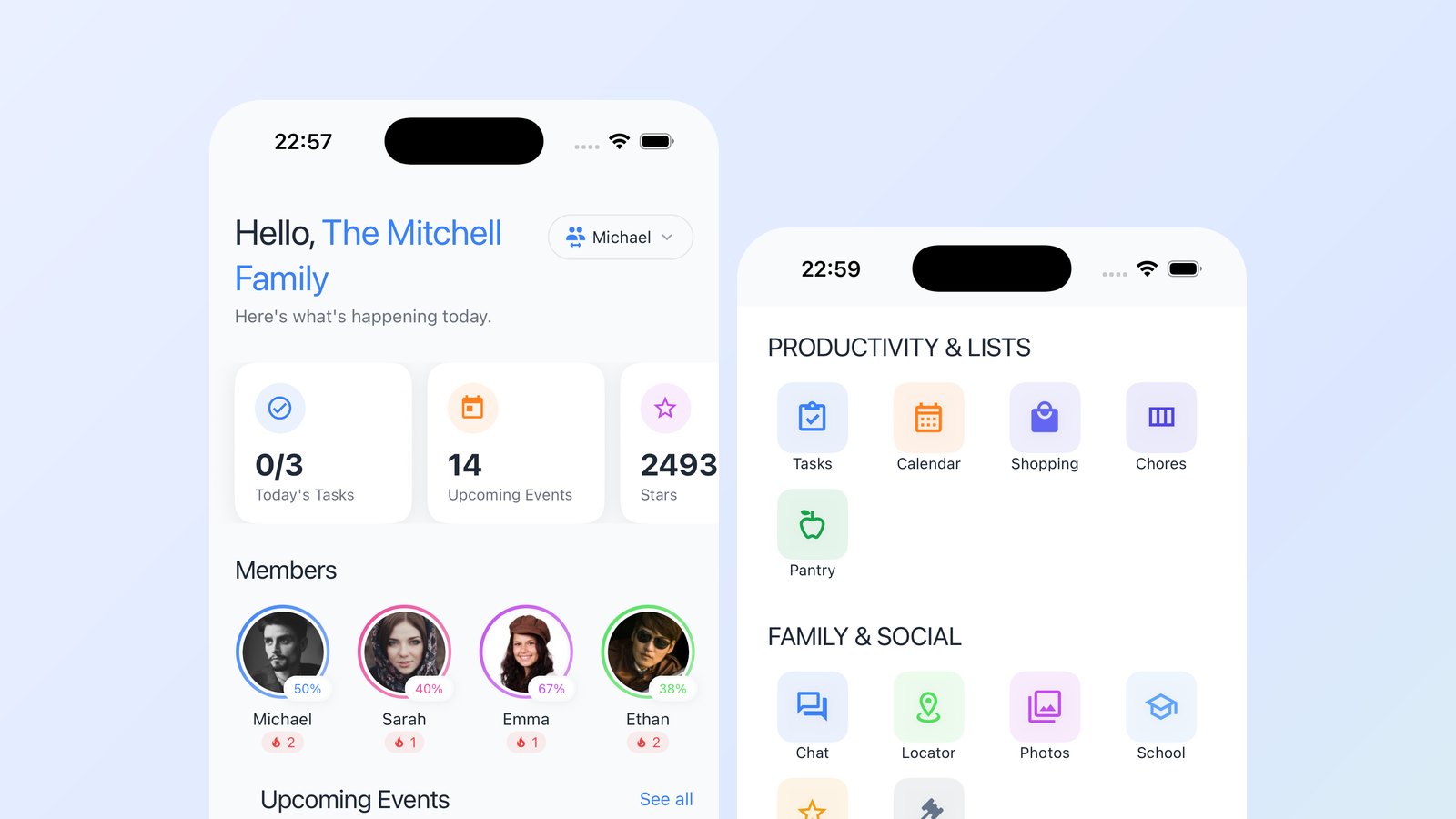
Ticking a box is more satisfying when it is counted. Some families use stickers, some use points. In FamilyHub, finished tasks earn stars, and each chore shows how many stars it is worth. Whatever you use, the child should see the result straight away, not at the end of the month.
Decide what the reward is before you start
Agree on a small set of rewards with the children, such as a film night or choosing the weekend breakfast. Rewards that are invented after the fact feel like bargaining.
Review it together
If a task is never done, ask why before adding pressure. It may be too big, at the wrong time of day, or simply unclear. Change the task, not the child.