 FamilyHub
When each adult keeps a private calendar and the children's activities live on paper notes, somebody is always surprised. A single shared calendar is not complicated, but it needs a few agreed habits.
Put every event in one place
School events, training, appointments and social plans all go in the same calendar. If an event exists only in someone's head or in a text message, it does not exist for the rest of the family.
Say who each event is for
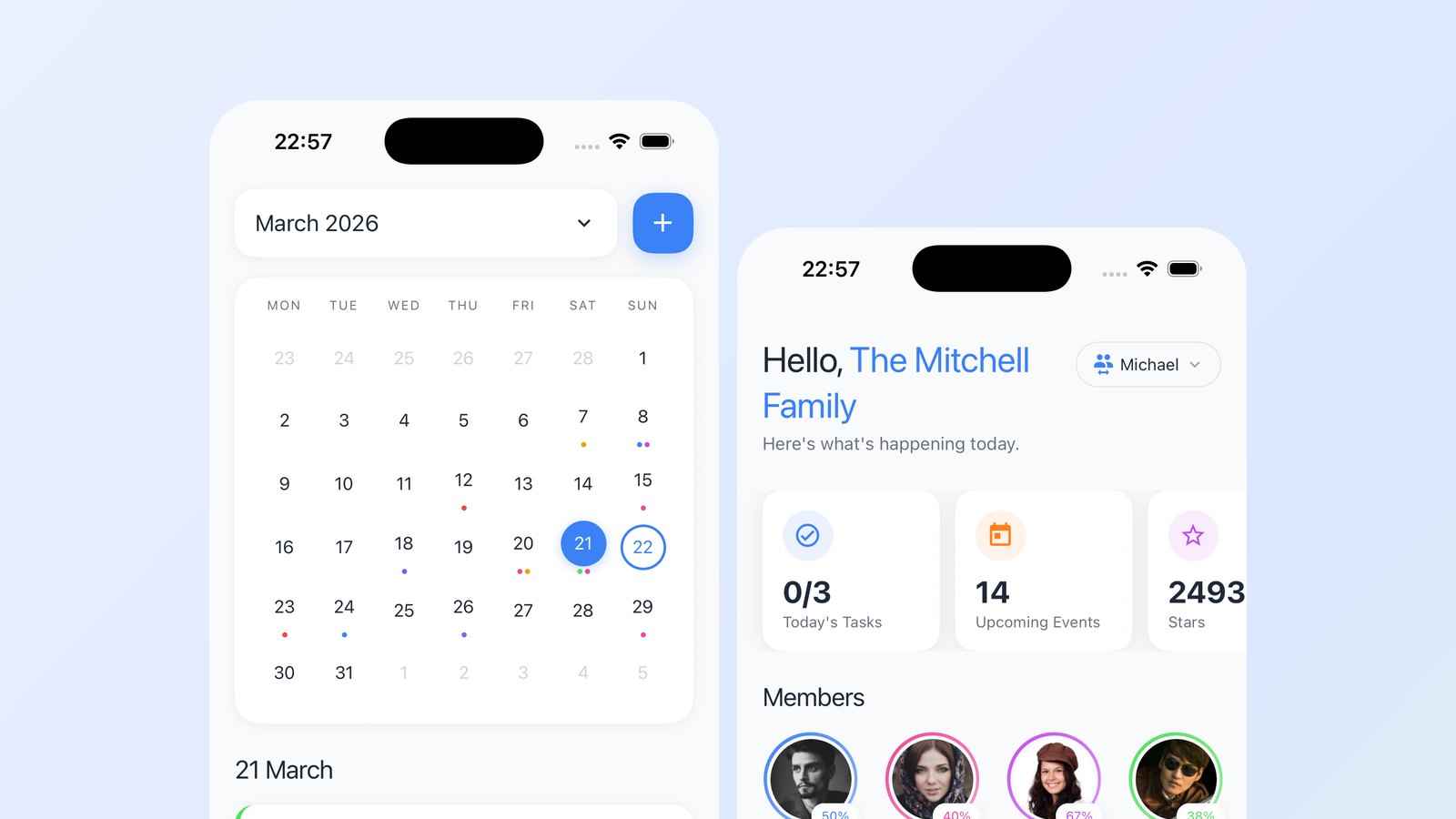
An event with no name attached makes people ask whether it concerns them. Assign each event to the person or people involved. Colour-coding by person, which FamilyHub's calendar does, lets you read the week at a glance.
Include the time and the place
"Football" is half an event. "Football, 09:00, the sports ground" lets anyone in the family do the drop-off. Add the location when you create the event, not when someone asks.
Add events when you hear about them
The calendar is only as good as its last update. Make it a habit to add an event the moment you learn about it, while the details are still in front of you.
Look at it together once a week
Run through the coming week at your family meeting. Clashes and missing lifts are far easier to fix on Sunday evening than on Thursday morning.